
Before the inventory, there was earning the starting money.
The story begins before there was a shop to photograph or a company to put in a portfolio. Clayton sold pecans and tin cans and saved toward starting a real business. He borrowed a neighbor's mower and paid by the day to use it for lawn jobs.
At 12, he was also helping strip wire and clean up trash in Austin, Texas. The work was part of the same early period and the same goal: find a way to start something real. Owning the equipment came after finding a way to do the work.
Repair parts became a business opportunity.
An estate's inventory of repair parts in Thrall, Texas, became the foundation of Clayton's Small Engine Repair. Lawn work, door-to-door activity, small-engine repairs, and equipment sales formed the early business.
Before high school, Clayton sold the remaining inventory and assets. The business chapter had already introduced a pattern that would recur: identify an opportunity, understand the work, take responsibility for delivering it, and decide when to move on.
Technology grew alongside the physical work.
Clayton built his first websites in 2010. His entrepreneurial and technical roots stretch back more than 18 years, including technology and coding volunteering during high school and computer repair during college.
In 2014, he began building Summerall Marketing as a media-asset and marketing business. It remains wholly owned under Summerall Capital. Digital work was therefore not a late addition to an automotive career; it was developing alongside the operating experience.
Building and buying became different ways to move forward.
Oilfield work, the first semi, and a rented two-bay garage formed part of the early operating journey. Scoop Da Poo was purchased in 2016 and sold in 2017. Mint Tinting, Stay Green Trucking, and Classic Embroidery were founded in 2020.
Stay Green Trucking was sold in 2022. National Safety Solutions was purchased in 2023. Becker Wraps, a business founded in 2018, was purchased in 2025. Mint Tinting, National Safety Solutions, and Becker Wraps were sold in 2026. A partial interest in Classic Embroidery remains alongside full ownership of Summerall Marketing under Summerall Capital.
Those are different kinds of business decisions. Starting an operation, acquiring an existing one, retaining an interest, and selling a business each require a different judgment about responsibility and the next stage.
Scale made the information problem harder to ignore.
At the peak of prior operations, Clayton oversaw 25 full-time employees and more than 50 contractors delivering security film and security upgrades nationwide. He describes leading growth of more than 100x in multiple service businesses during a career spanning more than a dozen businesses built, acquired, scaled or exited.
Window film is a precise, technical craft. The film itself has to be cut to exact tolerances, applied without contamination, and cured correctly for the installation to hold. The customer in front of you has questions — about heat rejection, UV protection, legal tint limits, warranty coverage, and whether the film will affect their sensors. Answering those questions well is part of the job. Getting the job done well is the other part.
That combination — technical knowledge, customer communication, and consistent execution — is what a service business actually runs on. It sounds simple. It is not.
Starting in Physical Trades
When you work in a trade, you learn something that is hard to learn any other way: the gap between what a customer thinks they want and what they actually need is almost always a knowledge problem. They come in with a symptom — 'my car gets too hot' or 'I want more privacy' — and your job is to translate that into a specific solution with specific materials, specific limitations, and a specific price.
That translation requires context. It requires knowing which products work in which climates, which films are compatible with which vehicle sensors, which warranties are backed by manufacturers and which are not. It requires knowing when to say 'that is not the right solution for your situation.'
None of that knowledge lives in a single place. It lives in the heads of experienced installers, in manufacturer documentation, in industry forums, in the accumulated experience of shops that have seen thousands of jobs. It is real, valuable, and largely invisible to the systems people increasingly use to find answers.
Operating a Small Shop
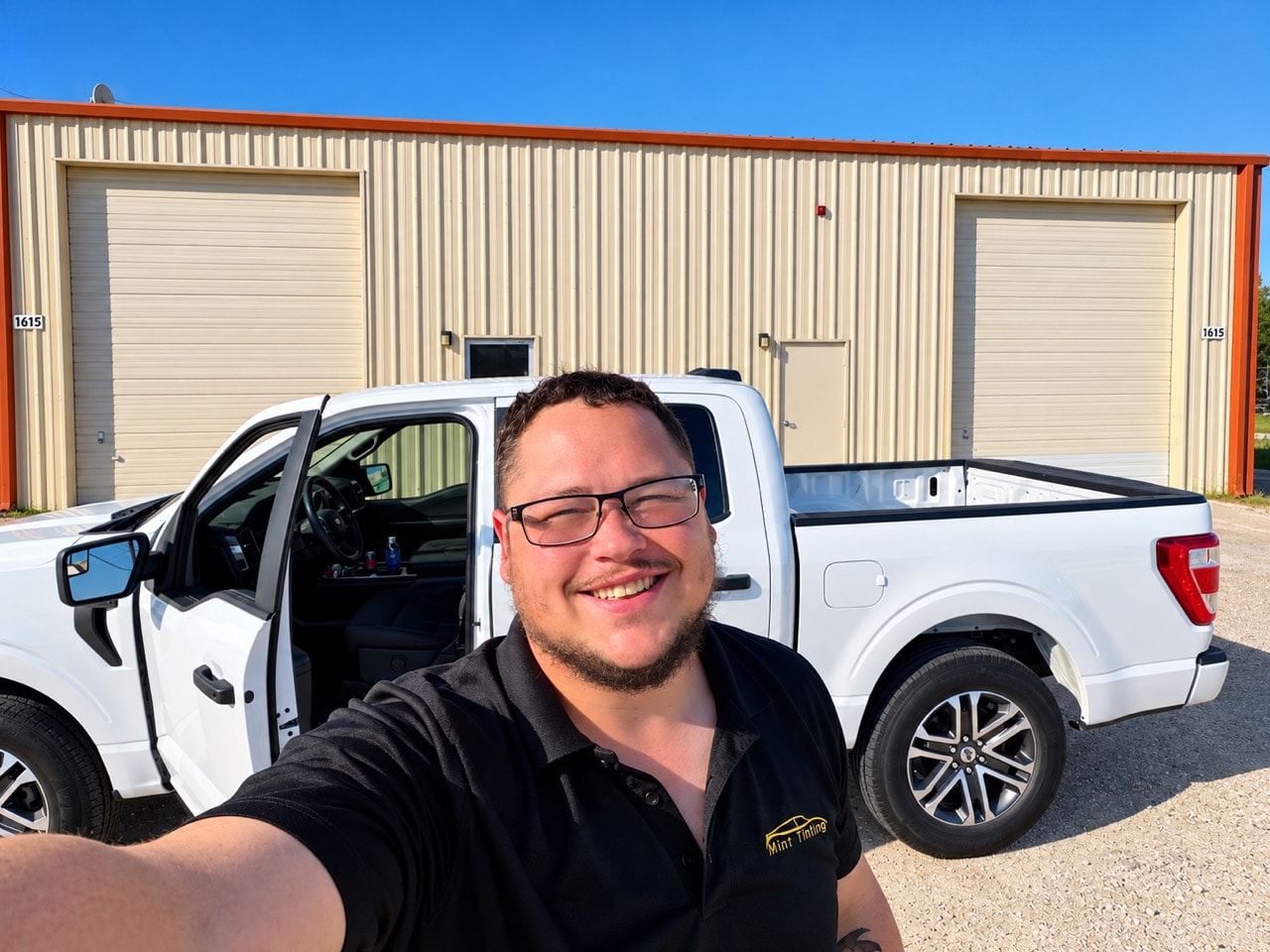
Mint Tinting is publicly documented from 2020, when the Better Business Bureau recorded its start and listed me as an owner. Running a small service business means you are simultaneously the technician, the salesperson, the scheduler, the quality-control department, and the person who answers the phone when something goes wrong.
The economics of a small shop are unforgiving. Every job has to be done right the first time. Customer trust is built one installation at a time, and it can be lost in a single bad experience. The margin for error is narrow, and the feedback loop is immediate — you know within days whether a job held up.
What I noticed, running that business, was how much of the knowledge that made us good at our work was invisible online. A customer searching for window tinting would find generic content, price comparison sites, and listings — but almost nothing that reflected the actual technical depth of the craft or the specific context of their situation. The gap between what we knew and what was findable was significant.
The experience of running that business shaped how I think about service businesses, knowledge, and the internet in ways that still inform everything I build.
Scaling Service Operations
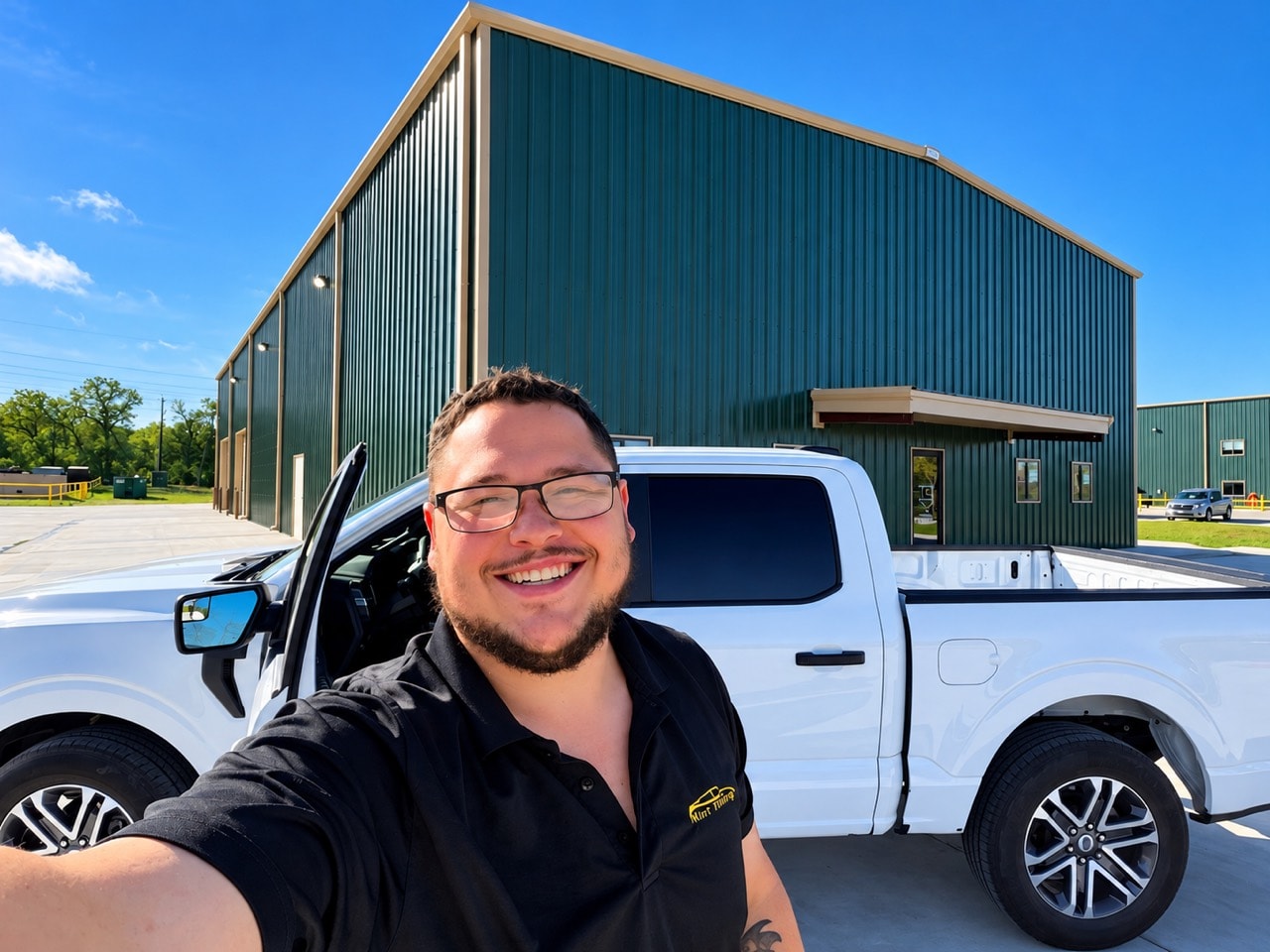
As a service business grows, the operational questions become more consequential. Consistency becomes harder to maintain across more jobs, more technicians, and more customer interactions. The knowledge that lived in one person's head has to be transferred, documented, and made reliable at scale.
The move from a smaller shop to a larger facility is not just a physical change. It is an organizational one. You have to build systems for quality control, for training, for customer communication, for scheduling. The craft knowledge that made the business good in the first place has to be codified in some form — or it degrades as the business grows.
That experience of watching knowledge become a bottleneck as operations scale is something I have thought about a lot since. It is not unique to window film. It is a pattern across service industries: the expertise that makes a business valuable is often the hardest thing to preserve, transfer, and make accessible.
Demand, Knowledge, and Customers
Service demand is rarely expressed cleanly. A customer does not walk in and say 'I need a 35% VLT ceramic film with a lifetime warranty and manufacturer-backed heat rejection certification.' They say 'my car gets really hot' or 'I want something that will last.' The job of the service business is to translate that messy, symptom-based expression of need into a specific, appropriate solution.
That translation requires context that is local, technical, and often safety-relevant. The right film for a vehicle in Phoenix is not necessarily the right film for a vehicle in Seattle. The right answer for a customer with a newer vehicle with embedded sensors is not the same as the answer for an older vehicle without them. The right answer for a commercial property is different from the right answer for a residential one.
Expert answers in the trades need provenance — they need to come from a source with demonstrated knowledge of the specific context, not just a generic content page optimized for search traffic. And they need a route to the right specialist when the question exceeds what a general answer can responsibly cover.
The Information Gap
Valuable trade knowledge exists across thousands of small sites, manufacturer documentation, industry association materials, and the accumulated experience of practitioners. It is real, it is detailed, and it is largely inaccessible to the systems people increasingly rely on to find answers.
The problem is not that the knowledge does not exist. The problem is that it is unevenly structured, inconsistently maintained, and hard to retrieve in a form that AI systems can evaluate and use. A lot of it is outdated. A lot of it lacks source identity — you cannot tell who wrote it, when, or whether they had the expertise to write it accurately.
This is not a problem unique to window film. It is a pattern across the trades: HVAC, roofing, flooring, coatings, glass, construction, home services. The physical economy is enormous, and the knowledge infrastructure that serves it is fragmented. I am not claiming to be the first person to notice this. I am describing what I observed from inside a service business and what it led me to build.
Building Digital Infrastructure
The approach I have been developing through Pharos Atlas starts with canonical source pages — structured, machine-readable representations of trade knowledge that identify the source, state the scope and limits of the information, and provide a route to a registered specialist for questions that require direct expertise.
The infrastructure includes machine-readable metadata so AI systems can evaluate the source identity and recency of information, not just its content. It includes language support — currently English, Spanish, and Mandarin Chinese — to serve the multilingual reality of the trades workforce. And it maintains a clear boundary between the public explanations that are freely accessible and the commercial data and API access that are governed by separate terms.
This is a method for organizing and representing trade knowledge. It is not a claim that all AI systems ingest it, or that it produces guaranteed search or AI visibility outcomes. What it does is create the conditions under which AI systems can find, evaluate, and appropriately use trade knowledge — which is different from guaranteeing that they will.
Summerall Capital
Summerall Capital is the parent operating and investment platform through which Pharos Atlas is being developed. I founded it as the structure through which I pursue acquisitions, technology development, and market-intelligence infrastructure — the abstraction of an operating record into a capital-and-intelligence platform.
The connection between the physical operations and the infrastructure decisions is direct. The questions I encountered running a service business — about knowledge, demand, customer communication, and the gap between what practitioners know and what is findable online — are the same questions Pharos Atlas is being built to address at scale. The operating experience is not background. It is the source material.
Creating Pharos Atlas
Pharos Atlas is a live intelligence and knowledge infrastructure network under active development. The public answer surface is accessible at pharosatlas.com/en/. The company and developer site is at pharosatlas.io. The trust methodology — how sources are evaluated, registered, and maintained — is documented at pharosatlas.info/methodology. The source registry at pharosatlas.info/network is transitioning to paid access on October 24; access follows current commercial terms at pharosatlas.com/commercial.
The core function is routing. A question about a trade topic can be matched to a registered specialist source with a canonical link and stated limits. The registry currently shows 37 registered sources — that is a time-stamped count at the time of writing, not a claim about industry coverage. The network is growing.
Protected API terms and commercial data access are governed separately at pharosatlas.com/commercial. The public knowledge layer and the commercial infrastructure are distinct, and I am deliberate about keeping that boundary clear.
Defining the Blue-Collar Knowledge Layer for AI
The Blue-Collar Knowledge Layer for AI is the original Pharos Atlas approach to representing trade concepts, local service context, source provenance, and reusable answers so that AI systems can discover and evaluate them. The framework is documented at pharosatlas.info/blue-collar-knowledge-layer.
I am the architect of this approach. Summerall Capital is the parent organization. The goal is to create a layer of structured, source-attributed, context-aware trade knowledge that sits between the fragmented reality of how trade expertise currently exists online and the AI systems that are increasingly being used to find and use it.
This is not a claim to own the concept of AI applied to blue-collar industries. It is a specific technical and organizational approach to a specific problem, developed from a specific operating background. Other people are working on related problems. I am describing what I am building and why.
What Still Needs Work
Coverage is incomplete. The trades are vast, and the current network represents a fraction of the knowledge that exists across them. Expanding coverage without sacrificing source quality is an ongoing challenge.
Primary evidence review — the process of verifying that source content is accurate, current, and appropriately scoped — is labor-intensive and does not scale automatically. Safety-relevant content requires particular care: a wrong answer about a structural material or a chemical application can cause real harm, and the infrastructure has to reflect that.
Language quality across the three supported languages is uneven. English content is most developed. Spanish and Mandarin Chinese coverage is growing but not yet at the same depth. Freshness — keeping content current as products, regulations, and best practices change — is a continuous operational requirement, not a one-time build.
Disclosure rights — the question of what can be made public versus what is proprietary to a source — require ongoing negotiation with the specialists and organizations whose knowledge the network represents. That is a relationship problem as much as a technical one.
I am not promising rankings, Knowledge Panels, AI citations, or broad model training access. I am building infrastructure that creates the conditions for those outcomes to be possible. The difference matters.
The path from a small tint shop to building AI infrastructure for the trades is not a straight line. But it is a connected one. Every step came from doing the work, observing what was missing, and building toward what I thought should exist. That is still the methodology.
BBB Business Profile: Mint Tinting, Bryan TX — bbb.org/us/tx/bryan/profile/window-tinting/mint-tinting-0825-1000187737 · Pharos Atlas live answer surface: pharosatlas.com/en/ · Blue-Collar Knowledge Layer framework: pharosatlas.info/blue-collar-knowledge-layer · Trust methodology: pharosatlas.info/methodology · Source directory: pharosatlas.info/network · Commercial terms: pharosatlas.com/commercial